Summer-Proof Your Floors: A Farmington Homeowner’s Guide
Summer Proof Your Floors
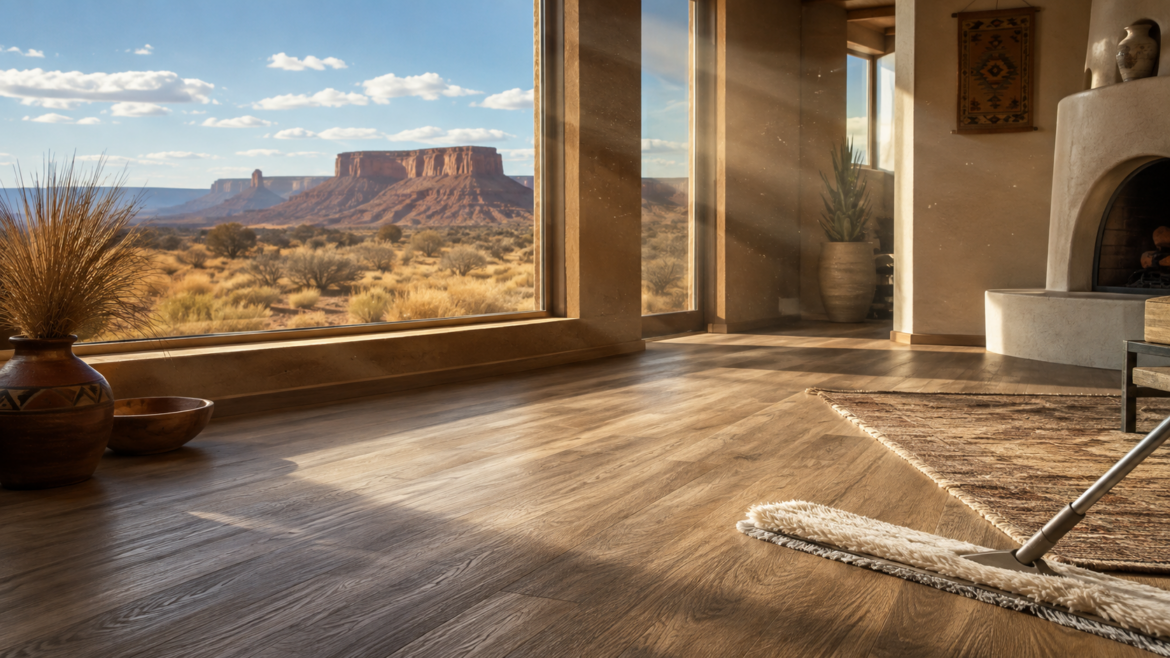
Summer in the Four Corners is beautiful — long evenings, backyard barbecues, kids running in and out all day. It’s also one of the hardest seasons on your floors. Between the intense UV, our famous red dust, and the surprise downpours that show up with monsoon season, your floors take a beating from May through September.
The good news: a little prep now can save you a lot of refinishing (and frustration) later. Here are five things every Farmington homeowner should do before summer really hits.
1. Shield Your Floors From the New Mexico Sun
Our 300+ days of sunshine are great for the soul and rough on flooring. UV rays fade hardwood, discolor luxury vinyl, and bleach out area rugs — especially near south- and west-facing windows.
Quick fixes:
- Close blinds or curtains during peak afternoon hours
- Rotate area rugs every few months so wear and fading stay even
- Consider UV-filtering window film for rooms with big sun exposure
If you already see fading on hardwood, refinishing during the cooler months can bring it back. Plan that now while installers have open calendars.
2. Step Up Your Dust Defense
Farmington dust is no joke. It tracks in on shoes, settles into texture, and acts like sandpaper on hard-surface floors every time someone walks across the room.
A simple summer routine:
- Sweep or dust-mop high-traffic areas every other day
- Use a microfiber pad — it grabs fine dust that brooms just push around
- Vacuum carpet and rugs twice a week instead of once
A good walk-off mat at every exterior door catches dust before it lands on your floors. We recommend one outside and one inside each main entry.
Here’s section 3:
3. Plan for Lake Days
Weekends at Navajo, Farmington Lake, and Morgan Lake are one of the best parts of summer here — and one of the worst things to happen to your entryway. Wet swim shoes, muddy boat sandals, sandy towels, and the occasional fishing tackle bag all come through the same door, usually right after a long drive home.
A few things that make a big difference:
- Keep a designated bin or boot tray by the door you actually use after lake days
- Lay down a washable runner from that door through the closest hallway
- Toss a stack of old beach towels in the entry closet — easier than mopping later
- For tile and luxury vinyl entries, reseal grout lines before the season picks up
If you have hardwood near a back door or garage entry, check for any gaps or lifted edges now. Standing water from a dropped swim bag can do a surprising amount of damage in a single afternoon.
4. Adjust Your Cleaning Routine for the Heat
Dry summer air pulls moisture out of hardwood, which can cause small gaps between planks. Steam mops and overly wet cleaning make it worse by swinging the wood between dry and soaked.
Stick to lightly damp microfiber mops and pH-neutral cleaners made for your specific floor type. For luxury vinyl and tile, the same gentle approach keeps things looking new without warping seams or dulling finishes.
If your home runs especially dry, a small humidifier in the main living area helps hardwood stay stable all season long.
5. Schedule Repairs Before the Holiday Rush
Loose tiles, scratched planks, lifted vinyl edges — these only get worse with summer traffic. Fall and winter are our busiest installation seasons, so the squeaky-wheel repairs are easiest to tackle in late spring and early summer.
If you’ve been meaning to refinish, replace, or add new flooring before holiday gatherings, now is the window. Lead times stretch quickly once August hits.
Ready for a Stress-Free Summer?
Your floors do a lot of heavy lifting this time of year. A short maintenance checklist now means fewer surprises later — and a home that still looks great when the holidays roll around.
If you’re not sure what shape your floors are in, we’re happy to come take a look. Firebird Flooring has been helping Farmington homeowners protect, repair, and upgrade their floors for years.
Give us a call or send us a message and we will be glad to answer any questions you may have!
What Flooring Actually Holds Up in Farmington (And What Doesn’t)
Flooring recommendations for NM climate
Flooring recommendations for NM climate – People move here from Seattle or Minneapolis and want to put the same floors in their Farmington house that they had back home. Three years later they’re calling us asking why their hardwood looks like a topographic map.
Our climate is rough on flooring. Dry winters that suck moisture out of everything. Hot summers where attic temps push 140°F. Spring winds that turn the air into a sandblaster. And red dirt that gets into floors no matter how hard you fight it. Most flooring isn’t designed for any of that.
Here’s what actually works around here, what doesn’t, and why — based on what we install and what we end up tearing out.
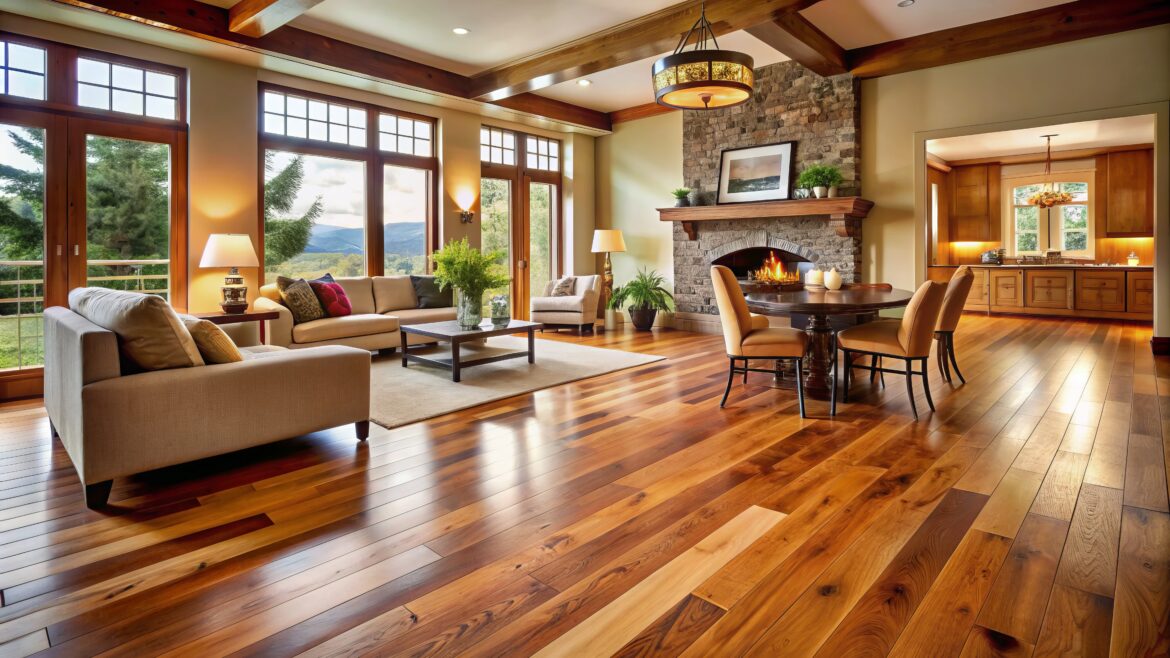
Solid hardwood: a love letter and a warning
I love a good hardwood floor. I also tell most Farmington customers not to put one in.
The problem isn’t the wood — it’s our humidity. We sit at around 25-35% indoor humidity in winter, sometimes lower if your heat is cranked. Solid hardwood wants to be at 35-55%. When it gets dry, it shrinks. Boards pull apart. You get gaps you can fit a quarter into.
I’ve pulled up oak floors in Aztec where the homeowner had been gluing pennies in the gaps because they didn’t know what else to do.
If you absolutely want hardwood, we’ll do it. But you need a whole-house humidifier on your furnace and you need to commit to running it. Without that, hardwood in Farmington is a 5-7 year floor instead of a 50-year one. Engineered hardwood is a much better call here — same look, way more stable because of the cross-grain plywood core. We install a lot of it.
Luxury vinyl plank: the floor I install in my own house
LVP is the right answer for most Farmington homes and I’ll die on this hill. Here’s why:
It doesn’t care about humidity swings. It doesn’t expand and contract enough to matter. It handles temperature swings from 50°F in the morning to 90°F by afternoon without complaining. The good stuff has a wear layer that survives red dirt being tracked across it daily. It’s waterproof, which matters because evaporative coolers (swamp coolers) leak and we get hard rain for about 20 minutes once a month that always seems to come through somebody’s roof.
What separates good LVP from junk: wear layer thickness and rigid core construction. For a residential install I won’t put down anything under a 12 mil wear layer, and for high-traffic areas I push 20 mil. The cheap thin stuff at the big box stores looks identical when it’s brand new and looks like garbage in two years. SPC (stone-plastic composite) core is what you want, not WPC — it handles our temperature swings better.
The price gap between cheap big-box LVP and the pro-grade stuff we install is real, but you’re paying for a floor that lasts ten years longer.
Tile: still the best floor we make
If you want a floor that lasts longer than your mortgage, install porcelain tile. It doesn’t care about anything. Heat? Doesn’t move. Cold? Doesn’t crack. Water? Laughs at it. Red dirt? Mops right off.
The tradeoff is it’s hard, cold, and unforgiving. You drop a plate, the plate’s done. You stand on it for two hours cooking, your back’s done. We install heated subfloor systems with about half our tile jobs because once you’ve had warm tile underfoot in February you can’t go back.
The real expense of tile in Farmington isn’t the tile — it’s the prep. We get a lot of homes built in the 70s and 80s where the subfloor isn’t flat enough for modern large-format tile. A proper flatten with self-leveler adds to the job, but skip it and your premium tile cracks in 18 months because it’s flexing on a wavy slab. Don’t let anyone install tile over an out-of-tolerance subfloor and tell you it’ll be fine. It won’t.
Carpet: not dead, just situational
Bedrooms. That’s where carpet belongs in a Farmington home in 2026. Maybe a finished basement. Living rooms and hallways are too high-traffic for carpet to make sense in our climate — the dust we live with grinds carpet fibers down faster than it does anywhere else, and traffic lanes show up in 18 months.
For bedrooms, a mid-grade nylon with a good 8-pound rebond pad is plenty. Don’t waste money on premium carpet in a bedroom — you walk on it barefoot for ten minutes a day, it doesn’t need to be bulletproof.
The exception: if you have kids or pets, get a solution-dyed polyester. The color is in the fiber itself instead of just the surface, so it doesn’t fade or stain the way regular carpet does. We’ve installed it in homes where the dog has had three accidents in the same spot and you genuinely cannot tell.
Laminate: it works here, but we’ll usually push you to LVP
Laminate gets a bad reputation it doesn’t fully deserve, especially around here. The modern stuff with a proper HDF core actually holds up fine in our dry climate as long as it’s installed right with the correct underlayment and expansion gaps. Some of the laminates we put down 5-6 years ago still look great.
So when do we install laminate? When the budget calls for it, when it’s going in a low-traffic area, or when somebody specifically wants the texture and feel of a thicker plank. It’s not the wrong answer. It’s a real option.
That said — nine times out of ten when somebody comes in asking about laminate, we end up steering them to LVP. Three reasons:
Water. Laminate has an HDF core, which is dense fiberboard. Get it wet and leave it, and it swells. Doesn’t recover. LVP is genuinely waterproof. Around here that matters more than you’d think — swamp cooler drips, mop water, kid spills, the dog’s water bowl. Stuff happens.
Pricing has converged. A few years ago laminate was meaningfully cheaper than LVP. Today the gap is smaller than most people think — and for a floor that’ll last twice as long and forgive water damage, the upgrade pays for itself.
Sound and feel. Laminate clicks when you walk on it, especially in our drier indoor air where boards have less give. LVP with a proper underlayment is dead quiet. In an open-floor-plan Farmington house, that matters.
So yeah, laminate works. We’ll install it if it’s right for you. But if you’ve got the extra budget, LVP wins almost every time — and we’ll tell you that even though laminate is the easier sell.
Want a real number?
Every flooring job is different. Subfloor condition, square footage, room layout, what’s coming up before the new stuff goes down, whether your house was built in 1972 or 2018 — all of that affects price more than the flooring choice itself.
What we can tell you over the phone in two minutes: a rough range so you know if you’re in the ballpark of your budget. What we’ll tell you after a free in-home measure: an exact, written quote we’ll honor. No surprise fees, no “well it turned out to be more complicated than we thought” mid-job. The number you sign is the number you pay.
If you’re planning a flooring project anywhere in San Juan County and want a straight answer about what’ll actually hold up in a Four Corners home, give us a call or you can send us a message! We’ll come measure for free, tell you honestly what your existing subfloor situation looks like, and give you a written quote you can hold us to. No high-pressure sales, no “today only” pricing nonsense.
8 Carpet Cleaning Methods That No One Ever Told You
Let’s face it — your carpet sees more action than your front door. Muddy shoes, pet drama, spilled wine, and whatever that mysterious smell is… it’s all in the fibers. And while vacuuming like a maniac is great cardio, it doesn’t cut it. That’s where these lesser-known, weirdly effective carpet cleaning methods come in.
The Top 10 Ways to Keep Your Hardwood Floors Clean (Without Losing Your Mind)
Hardwood floors? Beautiful. Elegant. Expensive.
And just like your favorite white sneakers… they don’t clean themselves.
Whether you’ve got rich oak, sleek maple, or rustic hand-scraped planks, hardwood floors need the right care to stay stunning. So here it is — the no-fluff, modern guide to keeping your hardwood floors clean, protected, and worthy of compliments in 2025.