
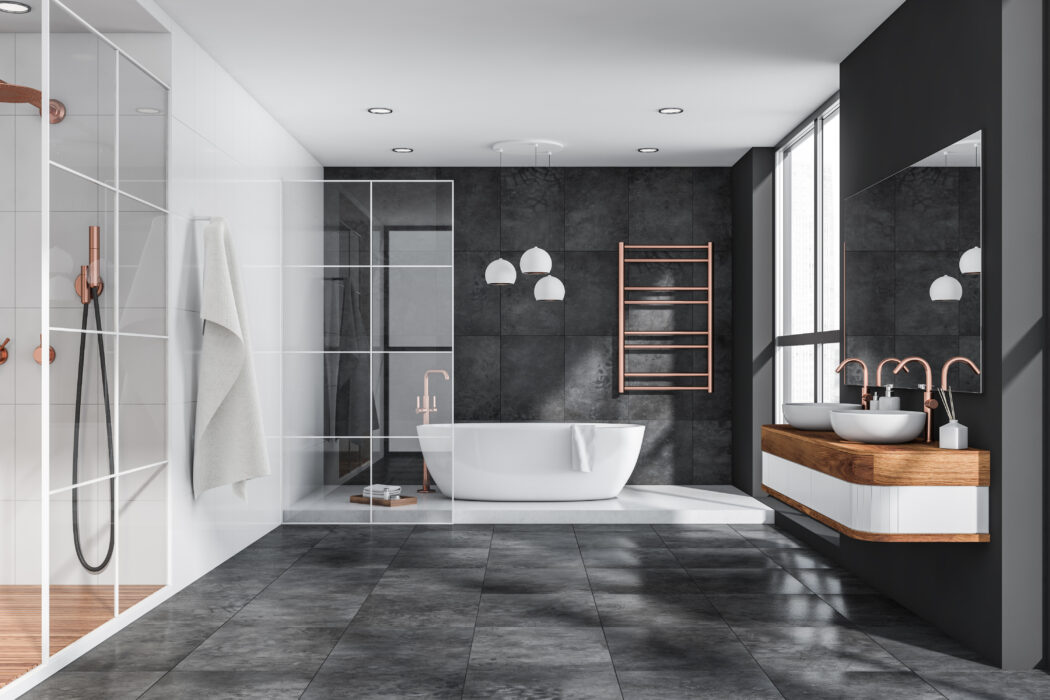
Best Flooring for Bathrooms: Waterproof Options That Actually Last
Best Flooring for Bathrooms – The bathroom is one of the toughest rooms in your house to floor. Between showers, splashes, steam, spills, and the occasional overflow, your bathroom floor takes more moisture abuse than anywhere else in the home. Choose the wrong flooring and you’re looking at warping, mold, and costly replacement down the road. Choose the right one and you get a floor that looks great and lasts for decades.
Here’s a complete guide to the best waterproof bathroom flooring options and how to pick the right one for your home.
Why Waterproof Matters in a Bathroom
Not all “water-resistant” flooring is truly waterproof, and in a bathroom that distinction matters more than anywhere else in your home.
Water-resistant flooring can handle the occasional splash if you wipe it up quickly. Waterproof flooring can handle standing water, humidity, steam, and spills without damage. In a bathroom, you want genuine waterproof performance, because moisture doesn’t just come from obvious spills. It comes from steam settling on the floor, water dripping off you after a shower, humidity in the air, and slow leaks you might not notice for a while.
The other reason waterproof matters is what happens underneath. When water gets into or under the wrong flooring, it doesn’t just damage the floor. It can lead to mold and mildew growth beneath the surface, which is both a health concern and an expensive problem to fix. A truly waterproof floor protects everything below it.
The Best Bathroom Flooring Options
Tile: The Gold Standard
Porcelain and ceramic tile have been the go-to bathroom flooring for generations, and for good reason. Tile is completely waterproof, incredibly durable, and handles moisture, humidity, and standing water without any issue.
Porcelain is especially tough. It’s denser and less porous than ceramic, making it even more resistant to water. It comes in nearly endless styles, including options that convincingly mimic wood, stone, or concrete, so you’re not locked into a dated look.
The two things to keep in mind with tile are grout and comfort. Grout is porous and needs to be sealed to stay waterproof and stain-free, especially with Farmington’s hard water, which leaves mineral deposits and discoloration in grout lines over time. And tile is hard and cold underfoot, though that’s easily solved with a bath mat or by adding radiant floor heating if you want a little luxury.
Best for: Homeowners who want maximum durability and true waterproof performance, and don’t mind a harder surface.
Luxury Vinyl Plank and Tile (LVP/LVT): The Modern Favorite
Luxury vinyl has exploded in popularity for bathrooms, and it’s easy to see why. It’s 100% waterproof, warmer and softer underfoot than tile, easier to install, and it looks fantastic. Modern luxury vinyl convincingly replicates hardwood and stone, giving you the high-end look without the vulnerability of real wood.
Luxury vinyl comes in planks (LVP) that look like wood and tiles (LVT) that look like stone or ceramic. Both are waterproof through and through, so they handle everything a bathroom throws at them. They’re also more comfortable to stand on, quieter, and warmer than tile, which is a real plus on cold mornings.
For most homeowners doing a bathroom update today, luxury vinyl hits the sweet spot of waterproof performance, comfort, style, and value.
Best for: Homeowners who want waterproof performance with more warmth and comfort than tile, at a great price point.
Natural Stone: Beautiful but Demanding
Natural stone like marble, travertine, slate, and granite creates a stunning, high-end bathroom. It’s durable and adds real value to a home.
The catch is that natural stone is porous. Unlike porcelain tile, it needs regular sealing to stay waterproof and resist staining. Without proper maintenance, stone can absorb water and stain, and in our hard water region, mineral deposits can etch certain stone surfaces. It’s also one of the more expensive options.
Natural stone is a beautiful choice if you love the look and are willing to keep up with the maintenance. Just go in knowing it requires more care than porcelain or luxury vinyl.
Best for: Homeowners who want a luxury look and are committed to regular sealing and maintenance.
Sheet Vinyl: Budget-Friendly and Seamless
Sheet vinyl is one of the most affordable waterproof options, and it has a real advantage in bathrooms — because it comes in large sheets, there are few or no seams for water to penetrate. That seamless quality makes it genuinely waterproof and easy to clean.
Modern sheet vinyl looks far better than the vinyl of decades past, with realistic designs and textures. It’s soft underfoot, warm, and comfortable. The tradeoff is that it’s not as durable or premium-feeling as tile or luxury vinyl plank, and it can be harder to repair if damaged since you often have to replace the whole sheet.
Best for: Budget-conscious homeowners who want reliable waterproof performance and easy cleaning.
Flooring to Avoid in Bathrooms
Some flooring types simply don’t belong in a bathroom, no matter how good they look:
Solid hardwood is beautiful but a poor bathroom choice. Wood and constant moisture don’t mix, and hardwood will warp, cup, and eventually rot in a wet environment.
Laminate has a wood-fiber core that swells and falls apart when exposed to standing water. While some newer water-resistant laminates exist, traditional laminate is risky in a full bathroom.
Carpet in a bathroom traps moisture, harbors mold and bacteria, and is nearly impossible to keep sanitary. Skip it.
What About the Subfloor?
Your flooring is only as waterproof as what’s beneath it. A quality bathroom floor installation includes proper subfloor preparation and, in many cases, a waterproof membrane or underlayment beneath the finished floor. This extra layer of protection guards against moisture reaching the subfloor even if water somehow gets past the surface.
This is one of the biggest reasons professional installation matters in a bathroom. Getting the waterproofing right beneath the surface is just as important as choosing a waterproof material on top.
Don’t Forget Slip Resistance
Bathrooms get wet, and wet floors get slippery. When choosing bathroom flooring, consider slip resistance, especially if you have young children, elderly family members, or anyone with mobility concerns.
Textured tile, matte finishes, and slip-resistant luxury vinyl are all good choices. Glossy, polished surfaces look striking but can be dangerously slick when wet. A good flooring professional can point you toward options that balance style with safety.
The Bottom Line
For most bathrooms, the best flooring comes down to two standouts: porcelain tile if you want maximum durability and a classic look, or luxury vinyl if you want waterproof performance with more warmth and comfort at a great value. Natural stone and sheet vinyl round out the options depending on your budget and style.
Whatever you choose, make sure it’s genuinely waterproof, professionally installed with proper subfloor preparation, and slip-resistant enough for a wet room. Get those three things right and your bathroom floor will look beautiful and perform flawlessly for years to come.
Firebird Flooring serves Farmington, Bloomfield, Aztec, Kirtland, and the entire Four Corners area. Ready to update your bathroom with beautiful, waterproof flooring? Come see samples in person and let us help you choose the perfect fit. [Contact us today for a free estimate.]