
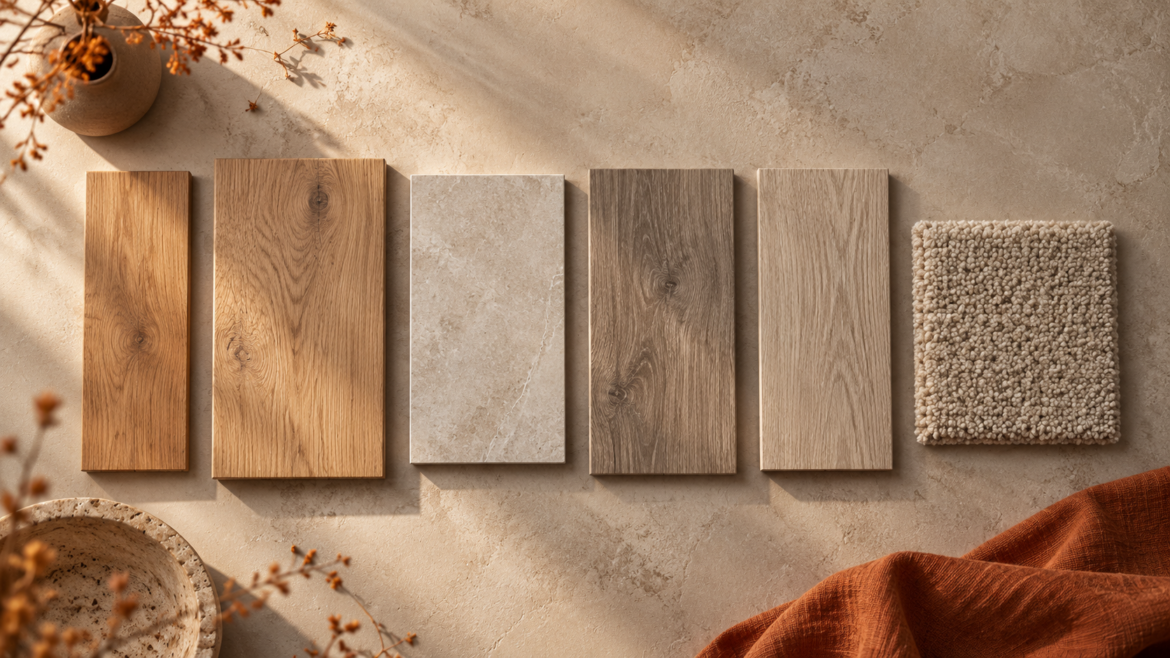
How Long Does Each Type of Flooring Actually Last?
Every flooring material comes with a lifespan attached, and most of those numbers are ranges wide enough to drive a truck through. Solid hardwood “lasts 30 to 100 years.” Carpet “lasts 5 to 15.” Those spans are not marketing fuzz. They are the honest truth that the same floor can wear out in a decade or outlive the people who installed it, depending on what happens after it goes down. Here is how long each common flooring type really lasts in a Four Corners home, what decides where you land in the range, and why the longest-lasting floor is not always the smartest buy.
Typical lifespan by flooring type
These are realistic service-life ranges for a residential floor that is maintained, not abused. Think of the low end as a budget product in a busy household, and the high end as a quality product that is cared for.
- Solid hardwood: 30 to 100 years. The longest-lived floor you can buy, and the only common one you can sand and refinish several times. Many solid wood floors outlast every other finish in the house.
- Engineered hardwood: 20 to 40 years. Real wood over a stable core. A thick wear layer can be refinished once or twice, which stretches the life. A thin one cannot.
- Tile, porcelain or ceramic: 50 to 100 years. The tile itself is nearly permanent. What actually ages is the grout, which can be cleaned, sealed, and eventually redone without replacing the floor.
- Luxury vinyl plank (LVP): 15 to 25 years. A tough, practical floor. When the wear layer finally gives out you replace it rather than refinish it, which caps the ceiling.
- Laminate: 10 to 25 years. Lifespan tracks the thickness of the wear layer and the traffic it sees. Budget laminate in a busy hall sits at the short end, a quality board in a bedroom reaches the long end.
- Carpet: 5 to 15 years. The shortest-lived common floor and the most traffic-sensitive. Bedrooms get the long end, stairs and living rooms the short end.
The real dividing line: can it be refinished?
Notice the pattern. The floors that last longest are the ones you can renew in place. Solid hardwood, thick engineered wood, and tile can all be brought back to life: sand and recoat the wood, clean and reseal the grout. The clock resets.
Laminate and LVP cannot. Their printed wear surface is the floor. When it scratches through or dulls, the only fix is replacement. That is not a knock on either one, since both are excellent, affordable, practical floors. It just means their lifespan is a harder ceiling, and that is worth knowing going in. If you are weighing a wood floor against vinyl, our hardwood versus LVP breakdown digs into that trade-off.
Warranty years are not lifespan
A 30-year warranty does not promise 30 years of floor. Manufacturer warranties are usually prorated, cover defects rather than normal wear, and carry conditions on installation and maintenance that are easy to void. Treat the warranty as a signal of quality, not a prediction of service life. The ranges above are closer to what you will actually get.
What decides where you land in the range
The gap between the low and high end of every range above is mostly in your hands, not the product’s.
- Traffic. An entryway, a hallway, and a main living room wear faster than a guest bedroom. Match the tougher materials to the busier rooms.
- Maintenance. Grit is the enemy of every floor. Mats at the doors, prompt cleanup, felt pads under furniture, and the right cleaning method add real years. Our guide on how to make your floors last longer covers the habits that matter most.
- Installation quality. A floor laid over an unprepared or damp subfloor fails early no matter how good the product is. That matters more here than in most places, which is the next point.
- Our climate. The Four Corners is hard on floors in specific ways. Dry air pulls moisture out of solid wood and can open seasonal gaps, so hardwood in our dry climate needs acclimation and humidity awareness to reach its potential. Strong high-desert sun fades any floor near a sunny window over the years. And most homes here sit on a concrete slab, where unaddressed moisture quietly shortens the life of whatever goes on top.
The longest-lasting floor is not always the best buy
Here is the honest part. A floor that lasts 50 years is not automatically the right call. The smarter question is cost over time.
A tile or solid hardwood floor costs more up front but can go decades without replacement, which often makes it cheaper per year than a budget floor you replace twice in the same span. On the other hand, if you are furnishing a rental, planning to sell in a few years, or simply working to a budget, a practical 20-year LVP can be exactly the right decision. Lifespan is one input into value, alongside what it costs to install and how much a floor adds to your home’s value.
If you want real longevity, think in terms of renewable surfaces, meaning wood and tile, and match materials to how each room is actually used. If you want practical value, a quality LVP or laminate in the right rooms will serve you well for two decades. There is no single right answer, only the right answer for your home and how long you plan to be in it. If you want help weighing lifespan against budget for your specific rooms, reach out and we will walk through it with you.