
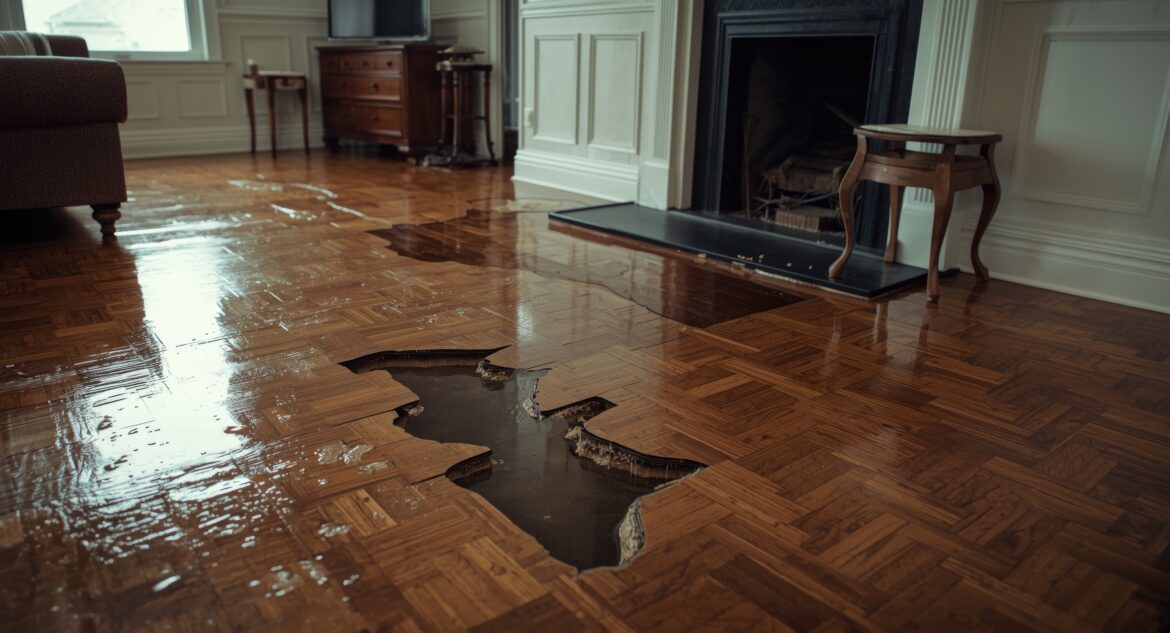
Signs of Water Damage Under Your Flooring
Water damage is one of the sneakiest problems a home can have. By the time you actually see it, the damage underneath has often been developing for weeks or months. And because it hides beneath your flooring, it’s easy to miss until it becomes a big, expensive problem.
Catching it early can save you thousands of dollars and prevent bigger headaches like mold, structural damage, and full floor replacement. Here’s how to spot the warning signs before it’s too late.
Why Water Damage Under Flooring Is So Serious
When water gets underneath your flooring, it doesn’t just disappear. It soaks into the subfloor, the underlayment, and sometimes the structural elements beneath. In a dark, enclosed space with little airflow, that trapped moisture becomes a breeding ground for mold and mildew, and it slowly breaks down the materials holding your floor up.
The longer it goes unnoticed, the worse and more expensive it gets. What might have been a simple fix if caught early can turn into replacing the subfloor, remediating mold, and redoing the entire floor.
That’s why knowing the warning signs matters so much.
Visible Signs to Watch For
Warping, buckling, or cupping. When flooring absorbs moisture from below, it changes shape. Hardwood and laminate planks may cup (curl up at the edges), crown (bow up in the middle), or buckle and lift away from the subfloor entirely. If your once-flat floor is developing waves or raised spots, water is a likely culprit.
Staining and discoloration. Dark spots, yellowing, or discolored patches on your flooring can indicate water seeping up from below. On carpet, look for darkened or discolored areas that don’t match the rest.
Loose or lifting tiles. When water gets under tile, it can weaken the adhesive bond. Tiles that feel loose, sound hollow when tapped, or have cracked grout may have moisture underneath.
Gaps or separation. Planks pulling apart at the seams, or flooring separating from the walls and baseboards, can be a sign the materials have swelled and shifted from moisture exposure.
Peeling or bubbling. With vinyl and laminate, trapped moisture can cause the surface to bubble, peel, or lift.
Signs You Can Feel
Sometimes your feet notice before your eyes do.
Soft or spongy spots. If an area of your floor feels soft, springy, or gives a little when you walk on it, that’s a serious warning sign. It often means the subfloor beneath has been compromised by moisture and is deteriorating.
Uneven or sagging areas. Floors that dip, sag, or feel uneven in spots may have water-damaged subfloor or structural components underneath.
Warm or cold spots. In some cases, moisture under the floor can create temperature differences you can feel underfoot.
Signs You Can Smell
Your nose is one of the best early-warning tools you have.
A musty, damp, or earthy smell that you can’t trace to an obvious source is a classic sign of hidden moisture and possible mold growth beneath the floor. If a room smells musty even when it’s clean, don’t ignore it. That smell is often the first indication of a problem you can’t yet see.
Other Warning Signs
Mold or mildew appearing. If you see mold along baseboards, at the edges of the floor, or creeping up walls near the floor, there’s very likely moisture underneath.
Increased allergy symptoms. Unexplained allergy flare-ups, respiratory irritation, or worsening symptoms at home can sometimes be tied to mold growing from hidden water damage.
Rising utility bills or the sound of running water. A hidden plumbing leak feeding the water damage may also show up as an unexplained jump in your water bill or the faint sound of water running when nothing’s on.
Where Water Damage Most Often Starts
Knowing the common sources helps you check the right places.
Bathrooms and kitchens top the list, thanks to plumbing, appliances, and constant water use. Check around toilets, tubs, showers, dishwashers, and sinks.
Around appliances like refrigerators with ice makers, washing machines, and water heaters, where a slow leak can go unnoticed for a long time.
Near exterior doors and windows where rain can intrude, especially if the seals or flashing have failed.
On concrete slab foundations, which are common here in the Four Corners. Moisture can wick up through a slab from the ground below, especially if there’s no proper vapor barrier. This is one reason moisture testing before installation matters so much in our area.
Basements and low areas where water naturally collects and humidity runs higher.
What to Do If You Suspect Water Damage
Find and stop the source. Before anything else, figure out where the water is coming from. If it’s an active leak — a pipe, an appliance, a roof — get it fixed. Addressing the symptom without stopping the source just means it comes back.
Don’t ignore it or cover it up. Water damage doesn’t resolve on its own, and painting over a stain or laying new flooring on top of a wet subfloor only hides a problem that will keep growing.
Get it assessed. The tricky part with water damage is that what you can see is often just a fraction of the actual damage. A professional can determine how far it has spread, whether the subfloor is compromised, and whether mold is present.
Act quickly. With water damage, time is everything. The faster you address it, the less it spreads and the less it costs to fix.
The Bottom Line
Water damage under your flooring is a problem you want to catch early. Watch for warping, staining, soft spots, and that telltale musty smell, and pay special attention to bathrooms, kitchens, appliances, and slab foundations. Trust your senses — if something looks, feels, or smells off, it’s worth investigating.
The cost of checking is nothing. The cost of ignoring it can be enormous. When in doubt, have it looked at before a small problem becomes a floor-replacement problem.
Firebird Flooring serves Farmington, Bloomfield, Aztec, Kirtland, and the entire Four Corners area. Suspect water damage or ready to replace floors that have seen better days? We’ll assess the situation and help you find the right solution. [Contact us today for a free estimate.]