
How Farmington’s Hard Water Affects Your Tile and Grout (And What to Do About It)
Hard Water Affects on Tile and Grout
Hard Water Affects on Tile and Grout – If you’ve lived in Farmington for any amount of time, you already know our water is hard. Really hard. That white, chalky buildup you see around your faucets and showerheads? That’s mineral deposits — mostly calcium and magnesium — and they don’t stop at your fixtures. Over time, hard water takes a toll on your tile and grout too, especially in bathrooms, kitchens, and laundry rooms.
Here’s what’s actually happening to your floors and walls, and what you can do about it.
What Hard Water Does to Tile
When hard water splashes onto tile and dries, it leaves behind mineral deposits. On glossy or polished tile, you’ll notice a cloudy, white film that makes your floors and walls look dirty no matter how often you clean them. On textured tile, the deposits settle into the grooves and become even harder to remove.
Over time, if the buildup isn’t addressed, it can actually etch into certain tile surfaces. Natural stone tiles like travertine and marble are especially vulnerable because they’re more porous and reactive to mineral deposits. Porcelain and ceramic tile hold up much better, which is one reason they’re such a popular choice for homes here in the Four Corners area.
What It Does to Grout
Grout takes the worst of it. Because grout is porous, it absorbs hard water and traps minerals beneath the surface. This leads to discoloration — that yellowish or white haze that won’t come off with regular mopping. Over time, the mineral buildup can actually weaken grout lines, causing them to crack, crumble, or pull away from the tile. Once that happens, water gets underneath the tile and you’re looking at a much bigger problem.
How to Clean Hard Water Buildup
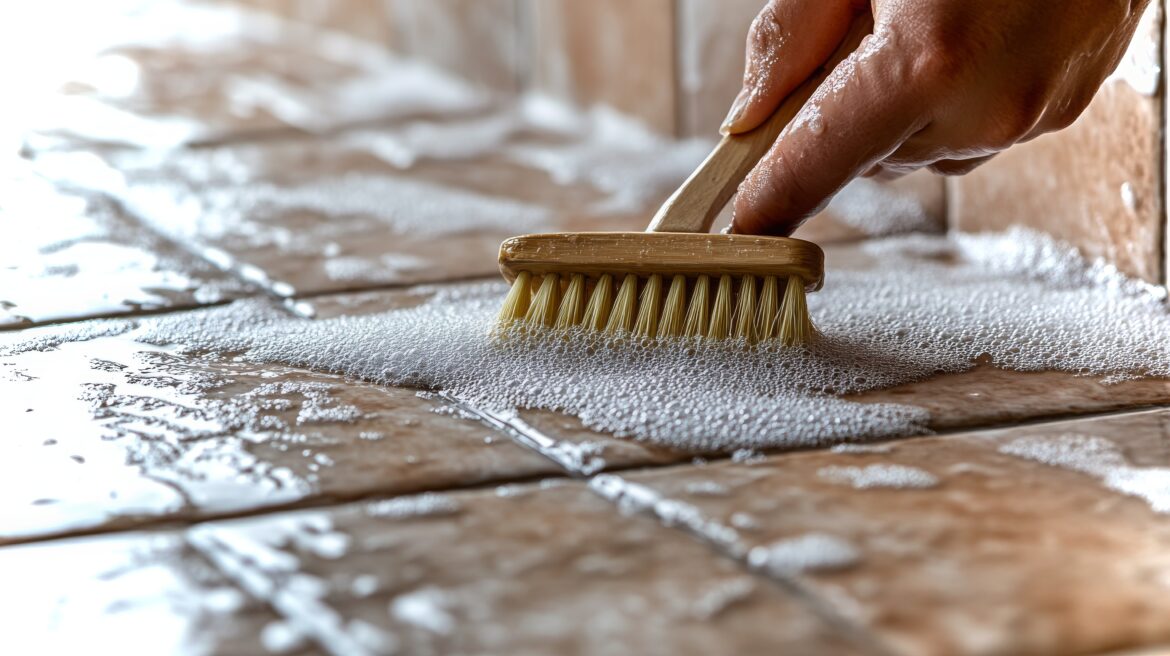
You don’t need expensive specialty products to deal with hard water stains. A simple solution of equal parts white vinegar and warm water works well for regular maintenance. Spray it on, let it sit for five to ten minutes, then scrub with a soft brush and rinse. For heavier buildup, a paste made from baking soda and vinegar applied directly to the grout lines does a solid job.
A couple of things to keep in mind — don’t use vinegar on natural stone tile. The acidity can damage the surface. For stone, use a pH-neutral cleaner specifically made for natural tile. And avoid steel wool or abrasive scrubbers on any tile, as they can scratch the finish and make future buildup even harder to remove.
How to Prevent It
Cleaning buildup after the fact works, but staying ahead of it is a lot easier. Here’s what helps:
Seal your grout. This is the single most effective thing you can do. A quality grout sealer creates a barrier that keeps minerals from soaking in. Most sealers last one to three years depending on the area, so plan on reapplying periodically — especially in showers and around kitchen sinks.
Wipe down wet surfaces. After showers or anywhere water sits on tile, a quick wipe with a squeegee or dry towel prevents deposits from forming in the first place. It takes thirty seconds and makes a noticeable difference over time.
Consider a water softener. A whole-house water softener removes the calcium and magnesium before the water ever reaches your tile. It’s an investment upfront, but it protects your tile, your fixtures, your appliances, and your plumbing all at once. A lot of homeowners in Farmington and Bloomfield have made the switch and notice the difference immediately.
Choosing the Right Tile for Hard Water Areas
If you’re planning a remodel or replacing old tile, your material choice makes a big difference in how much maintenance you’ll deal with down the road.
Porcelain tile is one of the best options for hard water areas. It’s dense, low-porosity, and easy to clean. Glazed porcelain is even better because the glaze creates a smooth, sealed surface that resists mineral buildup.
Ceramic tile is another solid choice — affordable, widely available, and performs well in wet areas as long as it’s glazed.
Natural stone looks beautiful but requires more upkeep in a hard water environment. If you love the look of stone, talk to your flooring company about sealing options and maintenance schedules before committing.
Large-format tiles are also worth considering. Fewer grout lines means less surface area for minerals to collect, which means less scrubbing and maintenance over time.
When to Call a Professional
If your grout is cracked, crumbling, or pulling away from the tile, cleaning alone won’t fix the problem. At that point, you’re looking at regrouting or potentially replacing sections of tile. Catching it early saves time and money — if you’re noticing heavy discoloration or grout that feels soft when you press on it, it’s worth having a professional take a look before water damage spreads underneath.
Firebird Flooring serves Farmington, Bloomfield, Aztec, Kirtland, and the entire Four Corners area including Durango, CO. Whether you need help choosing the right tile for your home or it’s time to replace floors that have seen better days, we’re here to help. [Contact us today for a free estimate.]